Construction procurement software for indents, PO approvals, and GRNs
Manage indents, approvals, purchase orders, GRNs, and vendor follow-up in one workflow instead of chasing updates across chats, registers, and disconnected sheets.
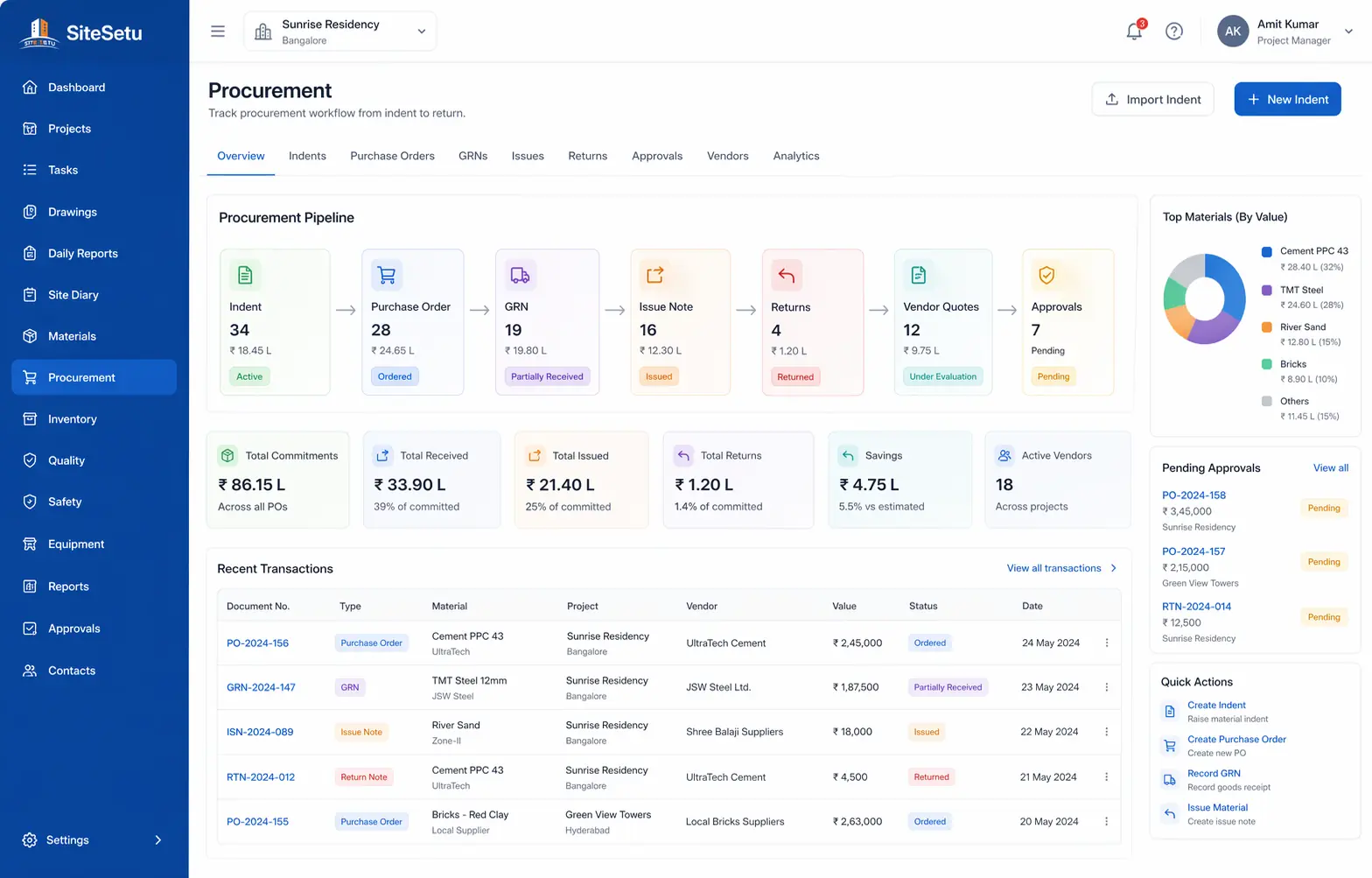
One trail from request to receipt helps site and office teams spot missing approvals, delayed deliveries, and quantity mismatches earlier.
Why procurement control matters now
The operational pressure is bigger, not smaller, so the material workflow has to get cleaner.
Project activity is still high
Budget 2026-27 kept public capital expenditure at about Rs 12.2 lakh crore. More active projects means more indents, vendors, receipts, and follow-up to control.
Union Budget 2026-27 overviewMaterial rates do not sit still
Steel and cement rates moved sharply through FY25. Rate history on POs shows what you actually paid last time, which protects margins when the next order is negotiated.
Material advances lock up working capital
Advances to vendors and the credit period on supply bills decide how much cash a project ties up. Tracking both against each PO keeps working capital visible before it becomes a crunch.
Where procurement breaks first
These are the recurring failure points behind urgent purchases, stock confusion, and invoice disputes.
Urgent material requests come on WhatsApp with no clear activity, quantity logic, or approval trail.
Purchase orders, delivery challans, GRNs, and invoices sit in separate folders so follow-up depends on one person.
Site teams cannot tell what is pending, partially received, rejected, or already issued to work.
Vendor performance is hard to review because late deliveries and short supplies are not captured in one place.
What a stronger workflow gives back
Good procurement software is less about more data and more about earlier visibility.
- Every indent carries location, activity, quantity, and required-by context before procurement starts.
- POs, receipts, attachments, and GRNs stay linked so the team can review one material trail instead of five files.
- Office and site teams can see pending approvals, delayed deliveries, and partial receipts before they affect progress.
- Material procurement becomes easier to reconcile against stock, issues, and project consumption.
The workflow teams usually need first
Keep the rollout simple: request, approve, order, and verify before you try to automate everything else.
01
Raise structured indents
Capture the material, quantity, activity, location, and required date before anyone places an order.
02
Route approvals fast
Send the request through the right approver so urgent buying does not depend on private chats and memory.
03
Issue the PO with context
Keep vendor details, rate history, delivery expectations, and attachments in the same record as the request.
04
Verify GRNs and receipts
Match what was ordered, what actually arrived, and what was accepted before stock updates or invoice follow-up.
Pages to open next
Use the product, workflow, and resource pages that support this procurement use case.
Inventory management module
Connect procurement control with stock, issue, return, and location-wise material visibility.
Construction billing software
Once GRNs are verified, quantities feed RA bills — see how billing connects to the procurement trail.
Construction management app overview
See the full construction management app: DPR, tasks, materials, drawings, and quality in one system.
Contractor workflows
See how multi-site contractors use procurement, inventory, and task control together.
Procurement process guide
Read the full step-by-step process from material planning and indenting to receipt and reconciliation.
Work order format guide
Separate PO control from subcontractor work orders for scope, rates, measurement, and billing clarity.
Purchase order management guide
Move POs out of WhatsApp and Excel into an approval trail that connects indents to GRNs.
GRN software guide
Record what actually arrived at site — quantity, quality, and documents — before vendor bills get cleared.
GST on construction materials
Understand current GST rates and input credit rules for cement, steel, and other site materials.
Prevent material theft
Close the gaps between receipt, storage, and issue that let material leak from site stores.
TMT steel grades guide (IS 1786)
Know which grade you are ordering — Fe 500 vs Fe 550D — and what the mill test certificate should show.
Procurement software FAQs
Common questions from contractor, site, and purchase teams before rollout.
What should construction procurement software track?
It should track the full material trail: indent, approvals, purchase order, receipt status, GRN, supporting documents, and the handoff into stock or issue records.
How is procurement software different from inventory software?
Procurement software starts earlier in the workflow. It focuses on what was requested, approved, ordered, and received. Inventory software takes over once stock is on hand and moving through issues, returns, and reconciliation.
Can smaller contractor teams use procurement software without a big purchase department?
Yes. Smaller teams usually benefit faster because one clear approval and document trail replaces repeated calls, spreadsheet edits, and invoice chasing.
How does procurement software reduce urgent buying?
It gives the team a visible queue of pending indents, approvals, and deliveries. That helps planners act earlier instead of discovering shortages only when work stops.
Replace urgent buying with a visible procurement queue
Give site and office teams one shared record for what was requested, what was ordered, what arrived, and what still needs action.